Quick answer
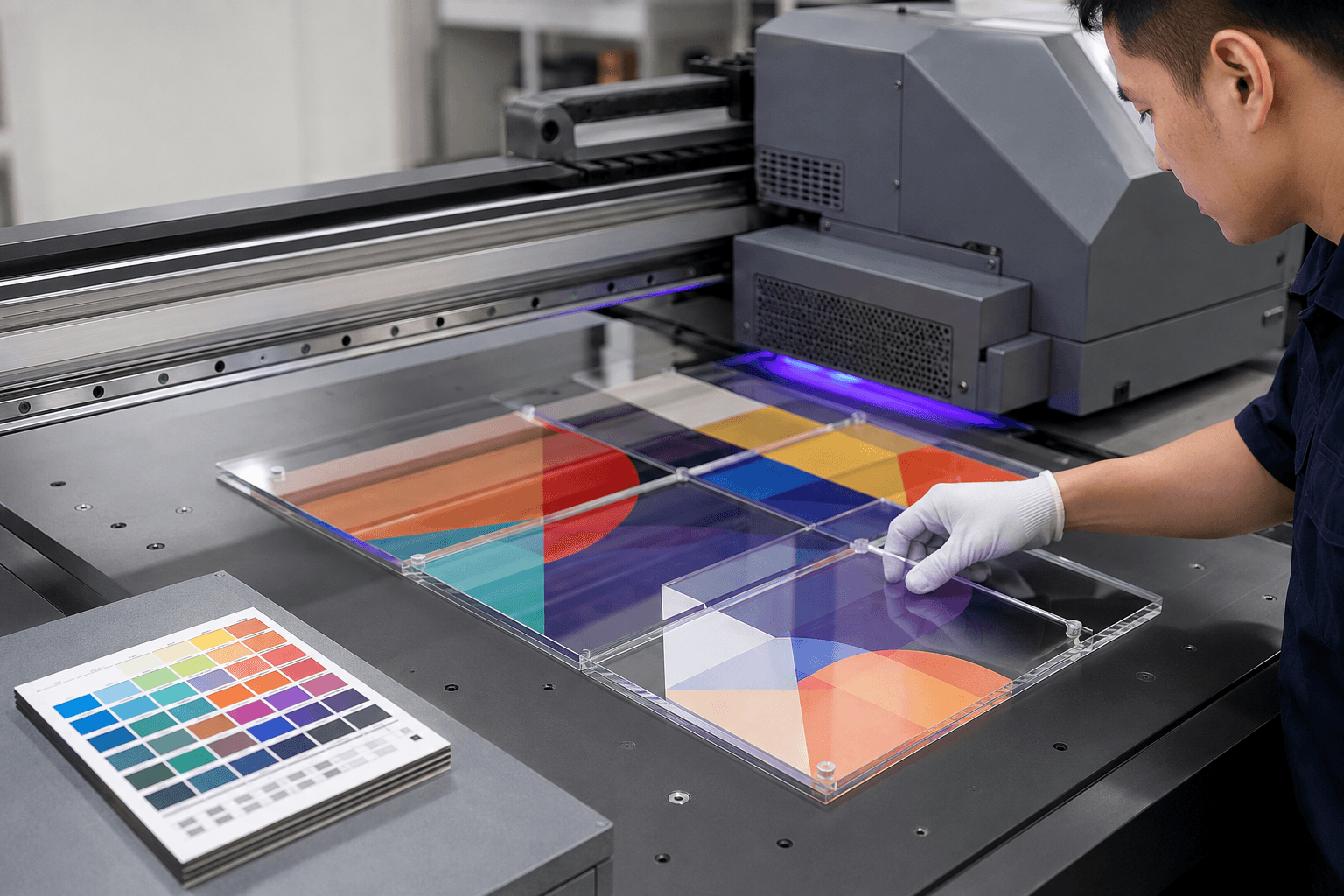
Choose UV printing when colour, gradients, detailed graphics or a branded visual system matter most. Choose laser engraving when the project calls for a restrained permanent-looking mark. Many premium acrylic projects use both, with printing for brand graphics and engraving for names or serial details.
Choose by communication, not fashion
Start with what a customer must notice first. Full-colour campaign art, product imagery and vibrant logos usually suit printing. A clean name, date or understated mark can suit engraving when sufficient contrast is available.
Prepare artwork for the selected process
A proof should identify the print face, any white underprint, mirrored artwork and layer order. For engraving, ask the factory to flag small type, thin lines and dense marks that may lose legibility on the chosen material.
Inspect the real sample under normal light
Screen proofs do not show surface reflection, viewing direction or the perceived contrast of a mark. Check the final sample under realistic lighting and include print registration or engraving clarity in the factory testing checklist.
Production and delivery checks
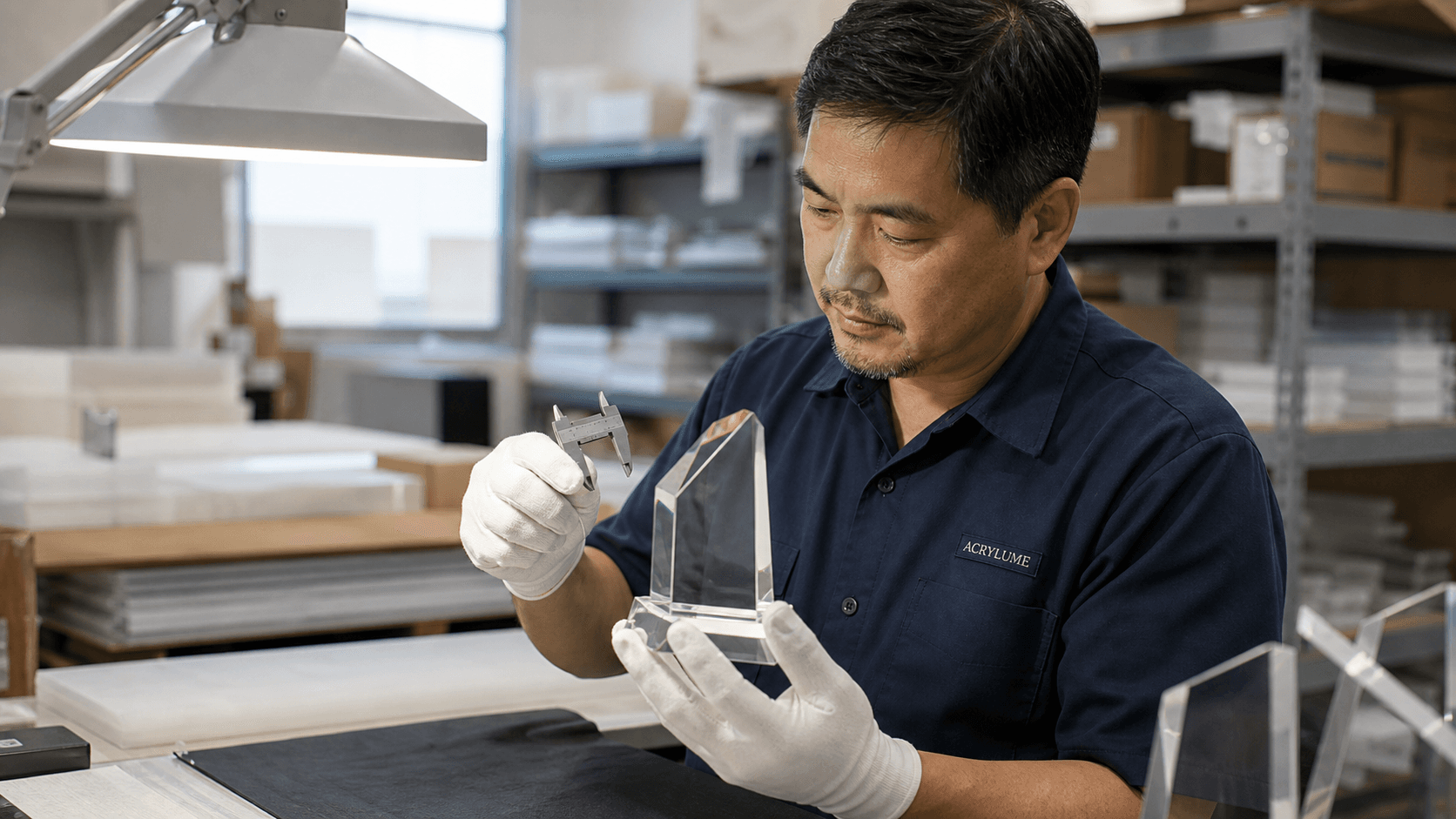
Before production, agree the artwork revision, material, finished dimensions, decoration, packing and the conditions that matter to the product application. During production, factory testing should focus on the approved sample and measurable customer requirements. Before dispatch, shipment inspection should confirm finished quality, packing count, protective materials and the readiness of each carton for its next handling stage.
Conclusion
A practical brief, a documented sample and a defined inspection plan give a custom acrylic project a stronger basis for cost, quality and delivery decisions. Share the details that affect the product in use, then keep the approved record available for future orders and programme updates.