Quick answer
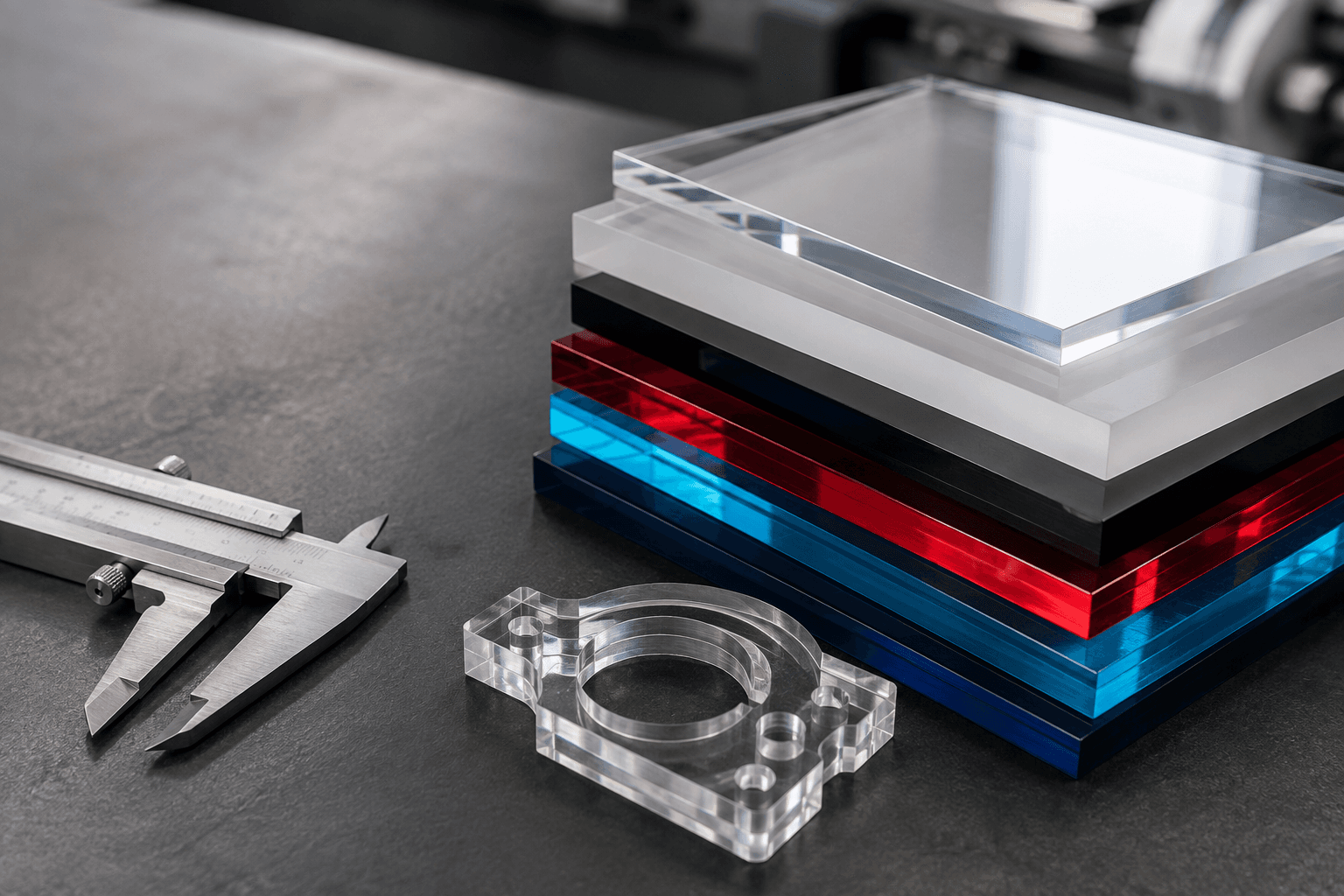
Laser cutting and CNC routing are not interchangeable labels for the same acrylic part. The preferred process depends on thickness, shape detail, edge requirement, machining features, tolerances, production quantity and downstream assembly. Buyers get a clearer quotation when the product function and visible finish are specified before asking a supplier to select the process.
This guide is written for buyers who need a usable decision record before requesting a quote, approving a sample or releasing a custom acrylic order for production. It focuses on the details that repeatedly affect feasibility, repeatability and receiving quality in B2B programmes.
Define the finished part, not only the outline
A silhouette is only one part of the specification. State material, sheet thickness, visible edges, holes, pockets, bends, assembly points and which dimensions affect fit. That lets the factory identify whether a cutting-only route is sufficient or machining steps are needed.
Turn the requirement into an approval record
For a B2B order, turn this point into a written part of the brief: name the decision owner, the evidence needed for approval and the condition that would require a revision. This prevents a commercial requirement from being lost between a visual reference, a supplier quotation and a production instruction. It also gives the factory a practical reference during factory testing instead of relying on an informal interpretation after production has started.
Validate the decision in actual use
During sample review, test this decision in the product application rather than in isolation. material thickness, visible edge, machined features, functional tolerance, assembly fit and inspection reference should be reviewed with the approved artwork, material and packing assumptions in view. Record the result with photographs and a dated approval note, then carry the same checkpoints into in-process inspection and shipment preparation.
Review edge and feature expectations
Some projects value a clean laser-cut visual edge; others need milled details, countersinks, slots, controlled pockets or a specific edge-finish process. Name the user-facing surfaces and the features that must fit another component so the sample is judged against the correct standard.
Turn the requirement into an approval record
For a B2B order, turn this point into a written part of the brief: name the decision owner, the evidence needed for approval and the condition that would require a revision. This prevents a commercial requirement from being lost between a visual reference, a supplier quotation and a production instruction. It also gives the factory a practical reference during factory testing instead of relying on an informal interpretation after production has started.
Validate the decision in actual use
During sample review, test this decision in the product application rather than in isolation. material thickness, visible edge, machined features, functional tolerance, assembly fit and inspection reference should be reviewed with the approved artwork, material and packing assumptions in view. Record the result with photographs and a dated approval note, then carry the same checkpoints into in-process inspection and shipment preparation.
Plan tolerances around function
Avoid treating every dimension as equally critical. A display shelf, sign mounting hole and award base slot each have different functional relationships. Provide mating-part information and a tolerance expectation where fit matters, then confirm it on a physical prototype.
Turn the requirement into an approval record
For a B2B order, turn this point into a written part of the brief: name the decision owner, the evidence needed for approval and the condition that would require a revision. This prevents a commercial requirement from being lost between a visual reference, a supplier quotation and a production instruction. It also gives the factory a practical reference during factory testing instead of relying on an informal interpretation after production has started.
Validate the decision in actual use
During sample review, test this decision in the product application rather than in isolation. material thickness, visible edge, machined features, functional tolerance, assembly fit and inspection reference should be reviewed with the approved artwork, material and packing assumptions in view. Record the result with photographs and a dated approval note, then carry the same checkpoints into in-process inspection and shipment preparation.
Use the sample for process validation
A physical sample should show the same material, thickness, finish and assembly direction expected in production. Factory testing can check dimensional fit, edge condition, product seating and any hardware installation before the method is locked for the bulk run.
Turn the requirement into an approval record
For a B2B order, turn this point into a written part of the brief: name the decision owner, the evidence needed for approval and the condition that would require a revision. This prevents a commercial requirement from being lost between a visual reference, a supplier quotation and a production instruction. It also gives the factory a practical reference during factory testing instead of relying on an informal interpretation after production has started.
Validate the decision in actual use
During sample review, test this decision in the product application rather than in isolation. material thickness, visible edge, machined features, functional tolerance, assembly fit and inspection reference should be reviewed with the approved artwork, material and packing assumptions in view. Record the result with photographs and a dated approval note, then carry the same checkpoints into in-process inspection and shipment preparation.
Consider quantity and nesting
Quantity, material utilization and repeatable setup can change the most practical production route. Ask for any cost-relevant assumptions to be stated separately, especially when a design contains several shapes or a mix of simple and machined parts.
Turn the requirement into an approval record
For a B2B order, turn this point into a written part of the brief: name the decision owner, the evidence needed for approval and the condition that would require a revision. This prevents a commercial requirement from being lost between a visual reference, a supplier quotation and a production instruction. It also gives the factory a practical reference during factory testing instead of relying on an informal interpretation after production has started.
Validate the decision in actual use
During sample review, test this decision in the product application rather than in isolation. material thickness, visible edge, machined features, functional tolerance, assembly fit and inspection reference should be reviewed with the approved artwork, material and packing assumptions in view. Record the result with photographs and a dated approval note, then carry the same checkpoints into in-process inspection and shipment preparation.
Carry the decision into inspection
The approved record should name the material, key dimensions, visible finish and functional checks. During shipment inspection, compare selected parts and one complete assembled unit with the approved sample instead of inspecting loose pieces without context.
Turn the requirement into an approval record
For a B2B order, turn this point into a written part of the brief: name the decision owner, the evidence needed for approval and the condition that would require a revision. This prevents a commercial requirement from being lost between a visual reference, a supplier quotation and a production instruction. It also gives the factory a practical reference during factory testing instead of relying on an informal interpretation after production has started.
Validate the decision in actual use
During sample review, test this decision in the product application rather than in isolation. material thickness, visible edge, machined features, functional tolerance, assembly fit and inspection reference should be reviewed with the approved artwork, material and packing assumptions in view. Record the result with photographs and a dated approval note, then carry the same checkpoints into in-process inspection and shipment preparation.
Buyer checklist before approval
A short written checklist helps a procurement team confirm that the production decision is complete before a project moves into volume manufacturing. Review the points below with the supplier and attach the final version to the approval record.
- Finished features described
- Visible edge expectation named
- Mating parts supplied
- Critical dimensions identified
- Representative sample approved
- Inspection criteria recorded
These checks are not intended to replace a project-specific specification. They provide a practical handover between the buyer, artwork owner, factory team and logistics contact so each party knows which requirement has already been approved and which still needs an answer.
Production and delivery checks
Production planning should begin with a controlled handover: the approved artwork or drawing, material and finish, sample photographs, packing instruction and named inspection points. In-process factory testing is most useful when it checks the risks that affect the final product in use, not only a random finished unit. If the product has an assembly, a product-fit condition, a variable-data field or an installation component, include that condition in the written inspection plan.
Before dispatch, shipment inspection should look at the product and the complete packed set. Open selected cartons, check the protective materials, count components, compare carton labels with the required destination logic and photograph the prepared set. This evidence gives the receiving team a clearer reference and makes repeat orders easier to manage.
Conclusion
A practical brief, a documented sample and a defined inspection plan give a custom acrylic project a stronger basis for cost, quality and delivery decisions. Share the details that affect the product in use, then keep the approved record available for future orders and programme updates.