Quick answer
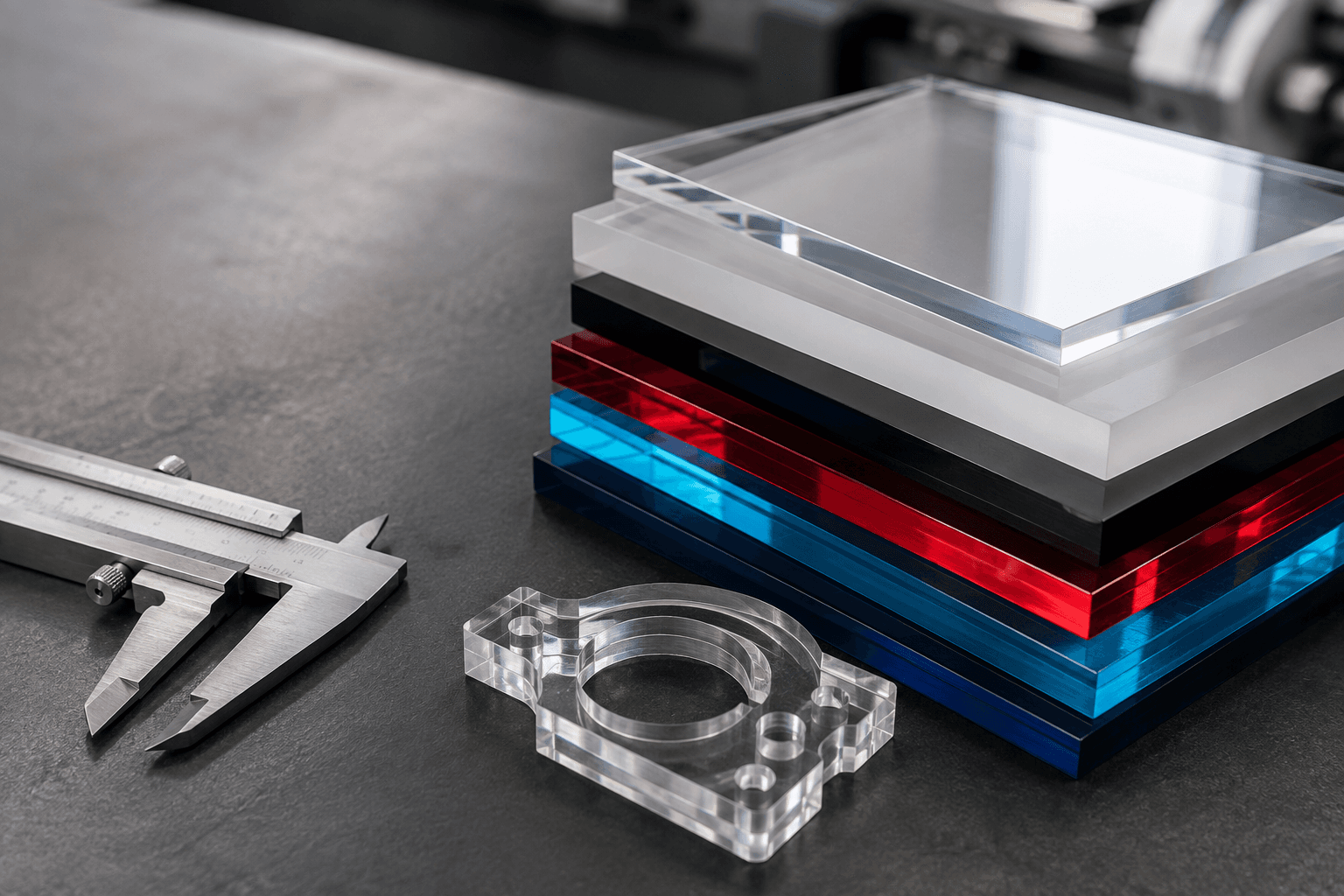
Buyers should choose acrylic sheets by starting with the finished application: optical appearance, required dimensions, unsupported span, fabrication route, mounting, handling and packing. A material sample and written specification are more reliable than selecting only by a catalogue image or nominal thickness.
This guide is written for buyers who need a usable decision record before requesting a quote, approving a sample or releasing a custom acrylic order for production. It focuses on the details that repeatedly affect feasibility, repeatability and receiving quality in B2B programmes.
How should buyers choose acrylic sheets?
Buyers should choose acrylic sheets by starting with the finished application: optical appearance, required dimensions, unsupported span, fabrication route, mounting, handling and packing. A material sample and written specification are more reliable than selecting only by a catalogue image or nominal thickness.
Turn the requirement into an approval record
For a B2B order, turn this point into a written part of the brief: name the decision owner, the evidence needed for approval and the condition that would require a revision. This prevents a commercial requirement from being lost between a visual reference, a supplier quotation and a production instruction. It also gives the factory a practical reference during factory testing instead of relying on an informal interpretation after production has started.
Validate the decision in actual use
During sample review, test this decision in the product application rather than in isolation. material selection, visible finish, critical dimensions, fabrication route, mounting, packing and approved sample evidence should be reviewed with the approved artwork, material and packing assumptions in view. Record the result with photographs and a dated approval note, then carry the same checkpoints into in-process inspection and shipment preparation.
Which applications suit acrylic sheets?
Acrylic sheets are often used in retail displays, protective panels, signage, display cases, machine guards, point-of-purchase fixtures and fabricated components. Suitability depends on the finished construction, load and service environment.
Turn the requirement into an approval record
For a B2B order, turn this point into a written part of the brief: name the decision owner, the evidence needed for approval and the condition that would require a revision. This prevents a commercial requirement from being lost between a visual reference, a supplier quotation and a production instruction. It also gives the factory a practical reference during factory testing instead of relying on an informal interpretation after production has started.
Validate the decision in actual use
During sample review, test this decision in the product application rather than in isolation. material selection, visible finish, critical dimensions, fabrication route, mounting, packing and approved sample evidence should be reviewed with the approved artwork, material and packing assumptions in view. Record the result with photographs and a dated approval note, then carry the same checkpoints into in-process inspection and shipment preparation.
How should buyers compare acrylic sheets with alternatives?
Compare acrylic with polycarbonate, PETG, glass, aluminium composite panel or an assembled alternative by impact expectation, clarity, stiffness, weight, fabrication needs, visible edge finish and the required service environment.
Turn the requirement into an approval record
For a B2B order, turn this point into a written part of the brief: name the decision owner, the evidence needed for approval and the condition that would require a revision. This prevents a commercial requirement from being lost between a visual reference, a supplier quotation and a production instruction. It also gives the factory a practical reference during factory testing instead of relying on an informal interpretation after production has started.
Validate the decision in actual use
During sample review, test this decision in the product application rather than in isolation. material selection, visible finish, critical dimensions, fabrication route, mounting, packing and approved sample evidence should be reviewed with the approved artwork, material and packing assumptions in view. Record the result with photographs and a dated approval note, then carry the same checkpoints into in-process inspection and shipment preparation.
Which factors drive price differences in acrylic sheets?
Price depends on sheet grade, finish or colour, thickness, usable sheet yield, cut size, fabrication complexity, protective film, quantity, surface-quality expectation, packing and delivery route. Compare quotations only when the material and finished scope are aligned.
Turn the requirement into an approval record
For a B2B order, turn this point into a written part of the brief: name the decision owner, the evidence needed for approval and the condition that would require a revision. This prevents a commercial requirement from being lost between a visual reference, a supplier quotation and a production instruction. It also gives the factory a practical reference during factory testing instead of relying on an informal interpretation after production has started.
Validate the decision in actual use
During sample review, test this decision in the product application rather than in isolation. material selection, visible finish, critical dimensions, fabrication route, mounting, packing and approved sample evidence should be reviewed with the approved artwork, material and packing assumptions in view. Record the result with photographs and a dated approval note, then carry the same checkpoints into in-process inspection and shipment preparation.
Which specifications and load needs matter?
Specify sheet type, colour or finish, nominal and critical finished thickness, cut size, tolerance where it affects fit, protective film, visible faces, load condition and any requirement for optical clarity or colour consistency.
Turn the requirement into an approval record
For a B2B order, turn this point into a written part of the brief: name the decision owner, the evidence needed for approval and the condition that would require a revision. This prevents a commercial requirement from being lost between a visual reference, a supplier quotation and a production instruction. It also gives the factory a practical reference during factory testing instead of relying on an informal interpretation after production has started.
Validate the decision in actual use
During sample review, test this decision in the product application rather than in isolation. material selection, visible finish, critical dimensions, fabrication route, mounting, packing and approved sample evidence should be reviewed with the approved artwork, material and packing assumptions in view. Record the result with photographs and a dated approval note, then carry the same checkpoints into in-process inspection and shipment preparation.
Is acrylic sheets suitable for fabrication?
Acrylic can be laser cut, CNC machined, engraved, polished, bonded and heat formed when the process is matched to the material and final construction. The best route should be sampled where edge finish, bending or precision fit matters.
Turn the requirement into an approval record
For a B2B order, turn this point into a written part of the brief: name the decision owner, the evidence needed for approval and the condition that would require a revision. This prevents a commercial requirement from being lost between a visual reference, a supplier quotation and a production instruction. It also gives the factory a practical reference during factory testing instead of relying on an informal interpretation after production has started.
Validate the decision in actual use
During sample review, test this decision in the product application rather than in isolation. material selection, visible finish, critical dimensions, fabrication route, mounting, packing and approved sample evidence should be reviewed with the approved artwork, material and packing assumptions in view. Record the result with photographs and a dated approval note, then carry the same checkpoints into in-process inspection and shipment preparation.
How should design, installation and mounting be planned?
Plan mounting around the support surface, panel size, hole locations, stand-offs, fastener clearance, expansion allowance and safe installation sequence. A drawing should identify fixing responsibility and any site measurement needed before production.
Turn the requirement into an approval record
For a B2B order, turn this point into a written part of the brief: name the decision owner, the evidence needed for approval and the condition that would require a revision. This prevents a commercial requirement from being lost between a visual reference, a supplier quotation and a production instruction. It also gives the factory a practical reference during factory testing instead of relying on an informal interpretation after production has started.
Validate the decision in actual use
During sample review, test this decision in the product application rather than in isolation. material selection, visible finish, critical dimensions, fabrication route, mounting, packing and approved sample evidence should be reviewed with the approved artwork, material and packing assumptions in view. Record the result with photographs and a dated approval note, then carry the same checkpoints into in-process inspection and shipment preparation.
How should surface quality and dimensions be inspected?
Inspect the sheet or finished part against the approved sample for surface condition, clarity, colour, thickness, cut dimensions, edge finish, hole position, protective film and any assembly or load-related feature.
Turn the requirement into an approval record
For a B2B order, turn this point into a written part of the brief: name the decision owner, the evidence needed for approval and the condition that would require a revision. This prevents a commercial requirement from being lost between a visual reference, a supplier quotation and a production instruction. It also gives the factory a practical reference during factory testing instead of relying on an informal interpretation after production has started.
Validate the decision in actual use
During sample review, test this decision in the product application rather than in isolation. material selection, visible finish, critical dimensions, fabrication route, mounting, packing and approved sample evidence should be reviewed with the approved artwork, material and packing assumptions in view. Record the result with photographs and a dated approval note, then carry the same checkpoints into in-process inspection and shipment preparation.
How should acrylic sheets be cleaned, stored and protected?
Keep protective film in place until fabrication or installation is ready, avoid abrasive cleaning methods, store sheets flat with support and separate finished faces during handling. Confirm cleaning products against the actual material and decoration.
Turn the requirement into an approval record
For a B2B order, turn this point into a written part of the brief: name the decision owner, the evidence needed for approval and the condition that would require a revision. This prevents a commercial requirement from being lost between a visual reference, a supplier quotation and a production instruction. It also gives the factory a practical reference during factory testing instead of relying on an informal interpretation after production has started.
Validate the decision in actual use
During sample review, test this decision in the product application rather than in isolation. material selection, visible finish, critical dimensions, fabrication route, mounting, packing and approved sample evidence should be reviewed with the approved artwork, material and packing assumptions in view. Record the result with photographs and a dated approval note, then carry the same checkpoints into in-process inspection and shipment preparation.
How should packaging and transit risks be controlled?
Protect visible faces with the agreed film or separator, support panels to prevent flexing, protect corners and edges, control component movement and use cartons sized for the actual finished parts. Open selected production cartons during shipment inspection to verify the approved pack-out.
Turn the requirement into an approval record
For a B2B order, turn this point into a written part of the brief: name the decision owner, the evidence needed for approval and the condition that would require a revision. This prevents a commercial requirement from being lost between a visual reference, a supplier quotation and a production instruction. It also gives the factory a practical reference during factory testing instead of relying on an informal interpretation after production has started.
Validate the decision in actual use
During sample review, test this decision in the product application rather than in isolation. material selection, visible finish, critical dimensions, fabrication route, mounting, packing and approved sample evidence should be reviewed with the approved artwork, material and packing assumptions in view. Record the result with photographs and a dated approval note, then carry the same checkpoints into in-process inspection and shipment preparation.
What should importers verify when sourcing?
Importers should verify the sheet grade, dimensions, thickness tolerance, finish, protective film, fabrication capability, sample evidence, packing method, inspection criteria, Incoterm, delivery route and documentation needed for their destination.
Turn the requirement into an approval record
For a B2B order, turn this point into a written part of the brief: name the decision owner, the evidence needed for approval and the condition that would require a revision. This prevents a commercial requirement from being lost between a visual reference, a supplier quotation and a production instruction. It also gives the factory a practical reference during factory testing instead of relying on an informal interpretation after production has started.
Validate the decision in actual use
During sample review, test this decision in the product application rather than in isolation. material selection, visible finish, critical dimensions, fabrication route, mounting, packing and approved sample evidence should be reviewed with the approved artwork, material and packing assumptions in view. Record the result with photographs and a dated approval note, then carry the same checkpoints into in-process inspection and shipment preparation.
Buyer checklist before approval
A short written checklist helps a procurement team confirm that the production decision is complete before a project moves into volume manufacturing. Review the points below with the supplier and attach the final version to the approval record.
- Application defined
- Material sample approved
- Critical dimensions stated
- Fabrication route tested
- Mounting planned
- Shipment inspection agreed
These checks are not intended to replace a project-specific specification. They provide a practical handover between the buyer, artwork owner, factory team and logistics contact so each party knows which requirement has already been approved and which still needs an answer.
Production and delivery checks
Production planning should begin with a controlled handover: the approved artwork or drawing, material and finish, sample photographs, packing instruction and named inspection points. In-process factory testing is most useful when it checks the risks that affect the final product in use, not only a random finished unit. If the product has an assembly, a product-fit condition, a variable-data field or an installation component, include that condition in the written inspection plan.
Before dispatch, shipment inspection should look at the product and the complete packed set. Open selected cartons, check the protective materials, count components, compare carton labels with the required destination logic and photograph the prepared set. This evidence gives the receiving team a clearer reference and makes repeat orders easier to manage.
Conclusion
A practical brief, a documented sample and a defined inspection plan give a custom acrylic project a stronger basis for cost, quality and delivery decisions. Share the details that affect the product in use, then keep the approved record available for future orders and programme updates.