Quick answer
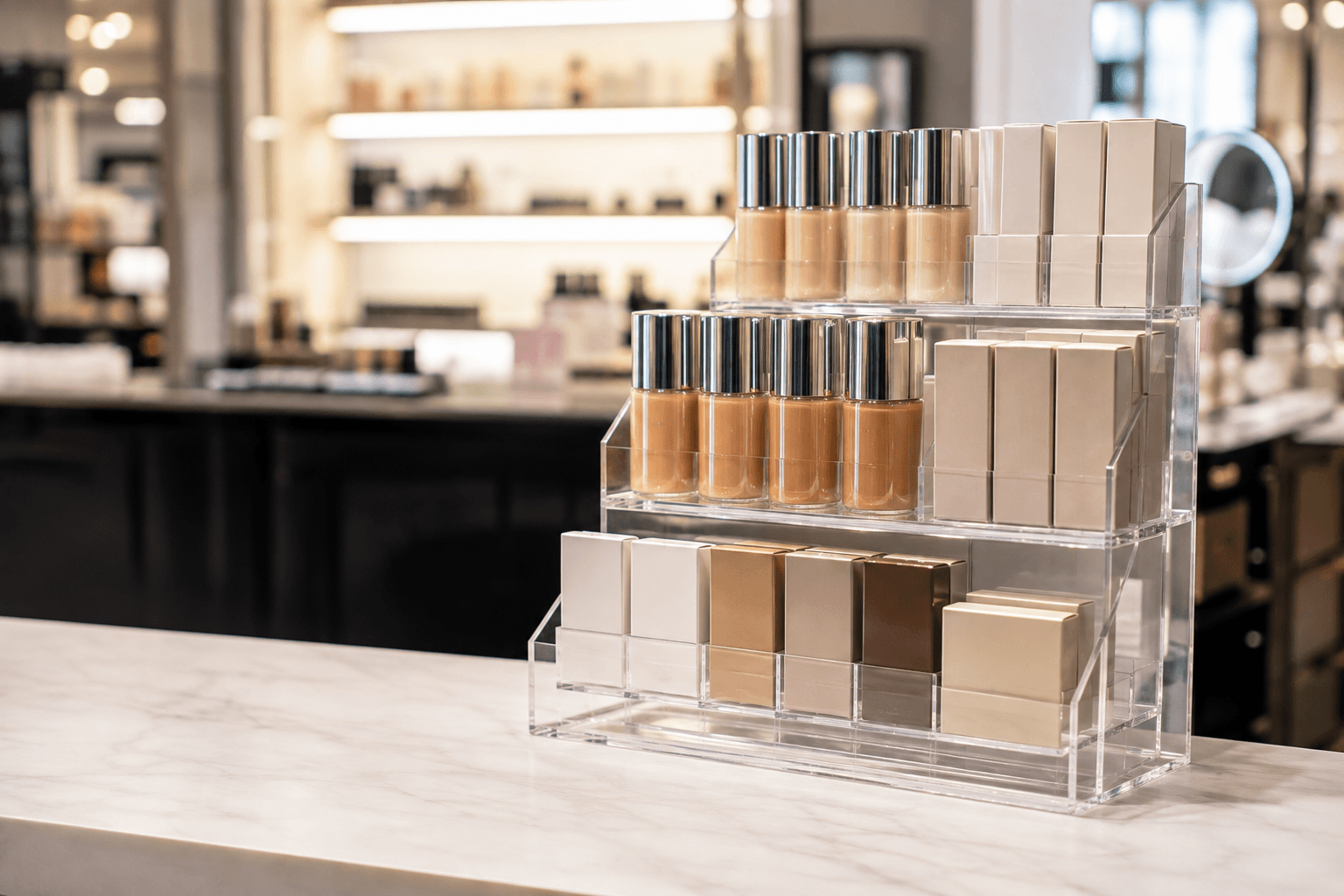
A retail counter display should make a product easy to see, select and replenish without competing with the product itself. The design needs to be checked with actual product units, the intended counter footprint and the staff workflow before production is approved.
Start with the product
Provide unit dimensions, weight, pack format and the number of facings required. A display should be tested with the real product because labels, caps and package width can change sightlines and usable capacity.
Design for store staff
Confirm where staff grip products, how they refill the display and whether the fixture will be moved during cleaning. These practical steps influence divider height, access openings, base stability and surface finish.
Check the rollout conditions
Review carton size, installation preparation, stocking instructions and the number of units per store. A prototype should be stocked and photographed before the factory finalises the pack-out plan.
Production and delivery checks
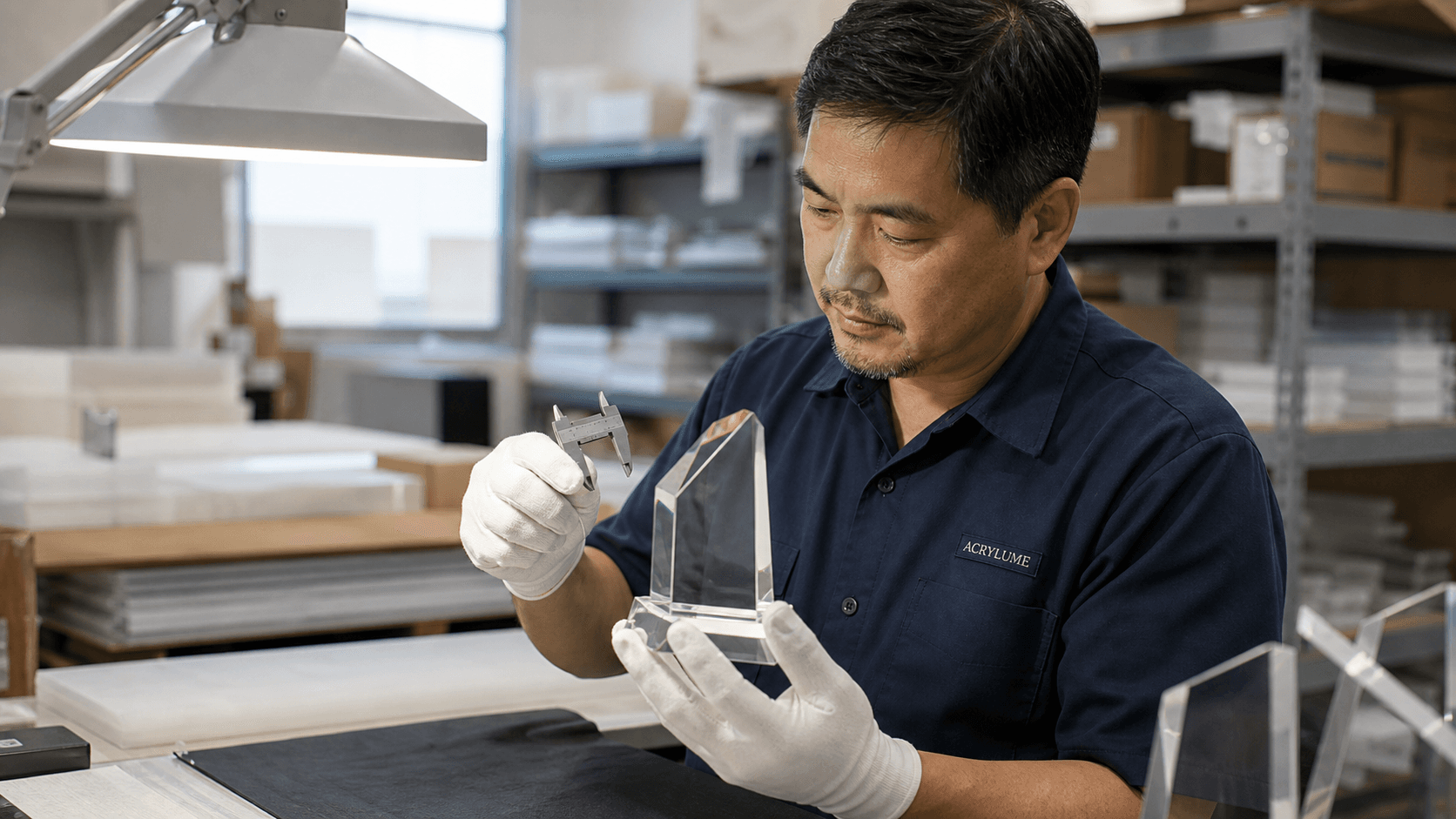
Before production, agree the artwork revision, material, finished dimensions, decoration, packing and the conditions that matter to the product application. During production, factory testing should focus on the approved sample and measurable customer requirements. Before dispatch, shipment inspection should confirm finished quality, packing count, protective materials and the readiness of each carton for its next handling stage.
Conclusion
A practical brief, a documented sample and a defined inspection plan give a custom acrylic project a stronger basis for cost, quality and delivery decisions. Share the details that affect the product in use, then keep the approved record available for future orders and programme updates.