Quick answer
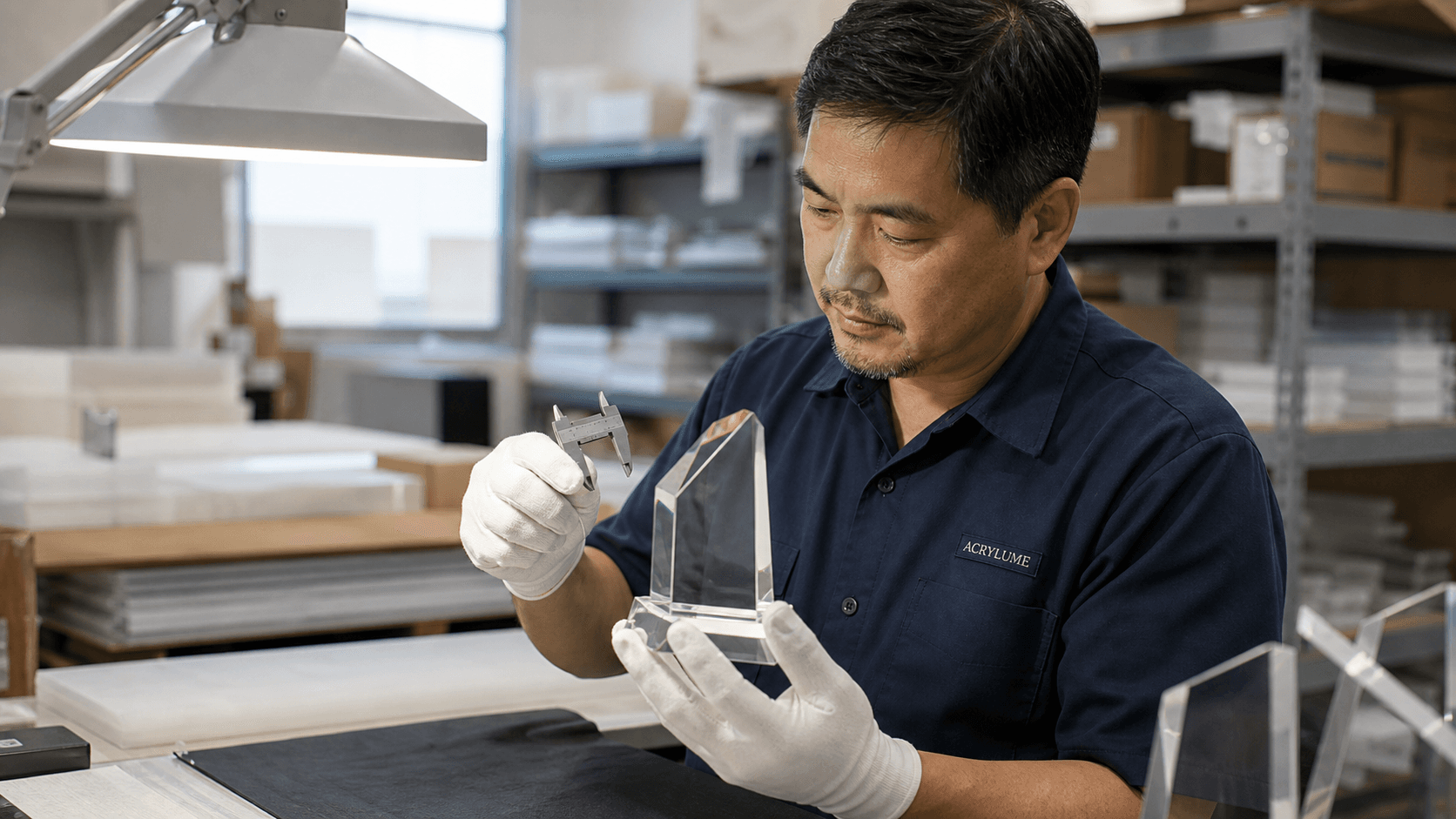
Factory testing and shipment inspection should reflect the product application and the approved sample. A useful plan checks the issues that can affect a buyer after delivery: artwork accuracy, dimensions, finish, assembly, product fit, packing and carton condition.
Define the checks before production
Customer requirements should identify which product details are critical, such as print registration, personalised names, loaded display stability, mounting holes or hardware. These criteria become more useful when agreed before the first production unit is made.
Use in-process inspection
In-process checks can identify repeated risks before a full run is finished. Depending on the product, this may include checking cut dimensions, print position, polish quality, adhesive alignment or product fit against the approved sample.
Inspect the shipment as a complete handover
Final inspection should include finished units and the way they are packed. Open selected cartons, verify quantities, review protective materials and photograph a completed packed set before export collection.
Production and delivery checks
Before production, agree the artwork revision, material, finished dimensions, decoration, packing and the conditions that matter to the product application. During production, factory testing should focus on the approved sample and measurable customer requirements. Before dispatch, shipment inspection should confirm finished quality, packing count, protective materials and the readiness of each carton for its next handling stage.
Conclusion
A practical brief, a documented sample and a defined inspection plan give a custom acrylic project a stronger basis for cost, quality and delivery decisions. Share the details that affect the product in use, then keep the approved record available for future orders and programme updates.