Quick answer
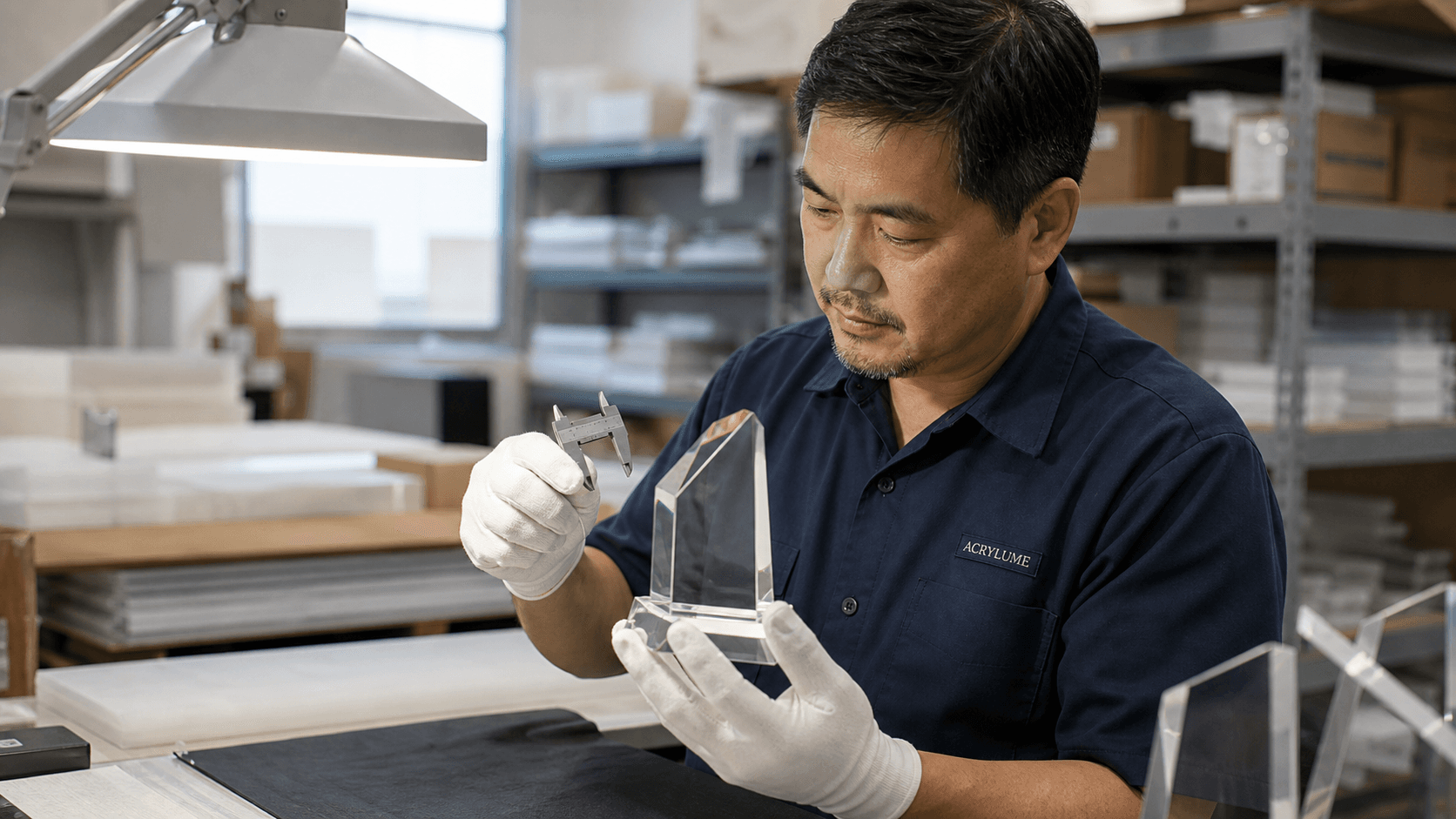
A dependable custom acrylic award project moves from a brief to a production drawing or proof, then to a sample and a written approval record. The sample should confirm not only the appearance, but also stability, personalisation, edge finish and presentation packaging.
Define the recognition moment
State the recipient type, presentation environment, quantity, individual naming requirement and delivery geography. Those details determine whether the award needs visual impact on a stage, compact shipping protection or a repeatable variable-data process.
Review construction before decoration
Confirm the base, layers, thickness and viewing angle before spending time on colour refinement. A logo can be printed, engraved or layered, but the award must remain stable and readable in its intended orientation.
Use the sample as a production record
Approve the artwork revision, final name list format and packing instruction alongside the physical sample. The approved record gives the factory a clear reference for in-process checks and final shipment inspection.
Production and delivery checks
Before production, agree the artwork revision, material, finished dimensions, decoration, packing and the conditions that matter to the product application. During production, factory testing should focus on the approved sample and measurable customer requirements. Before dispatch, shipment inspection should confirm finished quality, packing count, protective materials and the readiness of each carton for its next handling stage.
Conclusion
A practical brief, a documented sample and a defined inspection plan give a custom acrylic project a stronger basis for cost, quality and delivery decisions. Share the details that affect the product in use, then keep the approved record available for future orders and programme updates.