Quick answer
Acrylic cosmetic displays should be developed around product dimensions, tester access, hygiene, visual merchandising, refill route, store footprint, and rollout packing. Beauty buyers should validate the fixture with actual product packs and a realistic retail routine before locking a design for many stores.
This guide is written for buyers who need a usable decision record before requesting a quote, approving a sample or releasing a custom acrylic order for production. It focuses on the details that repeatedly affect feasibility, repeatability and receiving quality in B2B programmes.
Start with the finished-use decision
Acrylic cosmetic displays should be developed around product dimensions, tester access, hygiene, visual merchandising, refill route, store footprint, and rollout packing. Beauty buyers should validate the fixture with actual product packs and a realistic retail routine before locking a design for many stores.
Turn the requirement into an approval record
For a B2B order, turn this point into a written part of the brief: name the decision owner, the evidence needed for approval and the condition that would require a revision. This prevents a commercial requirement from being lost between a visual reference, a supplier quotation and a production instruction. It also gives the factory a practical reference during factory testing instead of relying on an informal interpretation after production has started.
Validate the decision in actual use
During sample review, test this decision in the product application rather than in isolation. the approved material, finished dimensions, visual surface, functional fit, components, packing, and final customer requirements should be reviewed with the approved artwork, material and packing assumptions in view. Record the result with photographs and a dated approval note, then carry the same checkpoints into in-process inspection and shipment preparation.
Specify the technical details that affect the result
Provide product dimensions, weights, bottle or palette geometry, tester position, quantity per facing, shelf heights, visible logo zones, lighting, cleaning needs, and counter footprint. Identify the product elements that must stay aligned or secured. A display drawing needs both the empty fixture and the fully loaded product condition.
Turn the requirement into an approval record
For a B2B order, turn this point into a written part of the brief: name the decision owner, the evidence needed for approval and the condition that would require a revision. This prevents a commercial requirement from being lost between a visual reference, a supplier quotation and a production instruction. It also gives the factory a practical reference during factory testing instead of relying on an informal interpretation after production has started.
Validate the decision in actual use
During sample review, test this decision in the product application rather than in isolation. the approved material, finished dimensions, visual surface, functional fit, components, packing, and final customer requirements should be reviewed with the approved artwork, material and packing assumptions in view. Record the result with photographs and a dated approval note, then carry the same checkpoints into in-process inspection and shipment preparation.
Connect the drawing to the real workflow
Discuss how staff replenish stock, clean testers, remove damaged units, and install the display in stores. Plan access without forcing a team to dismantle the fixture during daily service. If regional product ranges vary, define which parts are universal and which need a modular insert or labeled variation.
Turn the requirement into an approval record
For a B2B order, turn this point into a written part of the brief: name the decision owner, the evidence needed for approval and the condition that would require a revision. This prevents a commercial requirement from being lost between a visual reference, a supplier quotation and a production instruction. It also gives the factory a practical reference during factory testing instead of relying on an informal interpretation after production has started.
Validate the decision in actual use
During sample review, test this decision in the product application rather than in isolation. the approved material, finished dimensions, visual surface, functional fit, components, packing, and final customer requirements should be reviewed with the approved artwork, material and packing assumptions in view. Record the result with photographs and a dated approval note, then carry the same checkpoints into in-process inspection and shipment preparation.
Approve a representative sample before bulk release
Review a sample with real product packs, tester units, product weight, and representative lighting. Test visibility, grab-and-return behavior, wipe-down access, stability, and the way a shopper sees brand graphics behind the product. Record which product version and retail surface were used in the approval.
Turn the requirement into an approval record
For a B2B order, turn this point into a written part of the brief: name the decision owner, the evidence needed for approval and the condition that would require a revision. This prevents a commercial requirement from being lost between a visual reference, a supplier quotation and a production instruction. It also gives the factory a practical reference during factory testing instead of relying on an informal interpretation after production has started.
Validate the decision in actual use
During sample review, test this decision in the product application rather than in isolation. the approved material, finished dimensions, visual surface, functional fit, components, packing, and final customer requirements should be reviewed with the approved artwork, material and packing assumptions in view. Record the result with photographs and a dated approval note, then carry the same checkpoints into in-process inspection and shipment preparation.
Define factory testing and inspection evidence
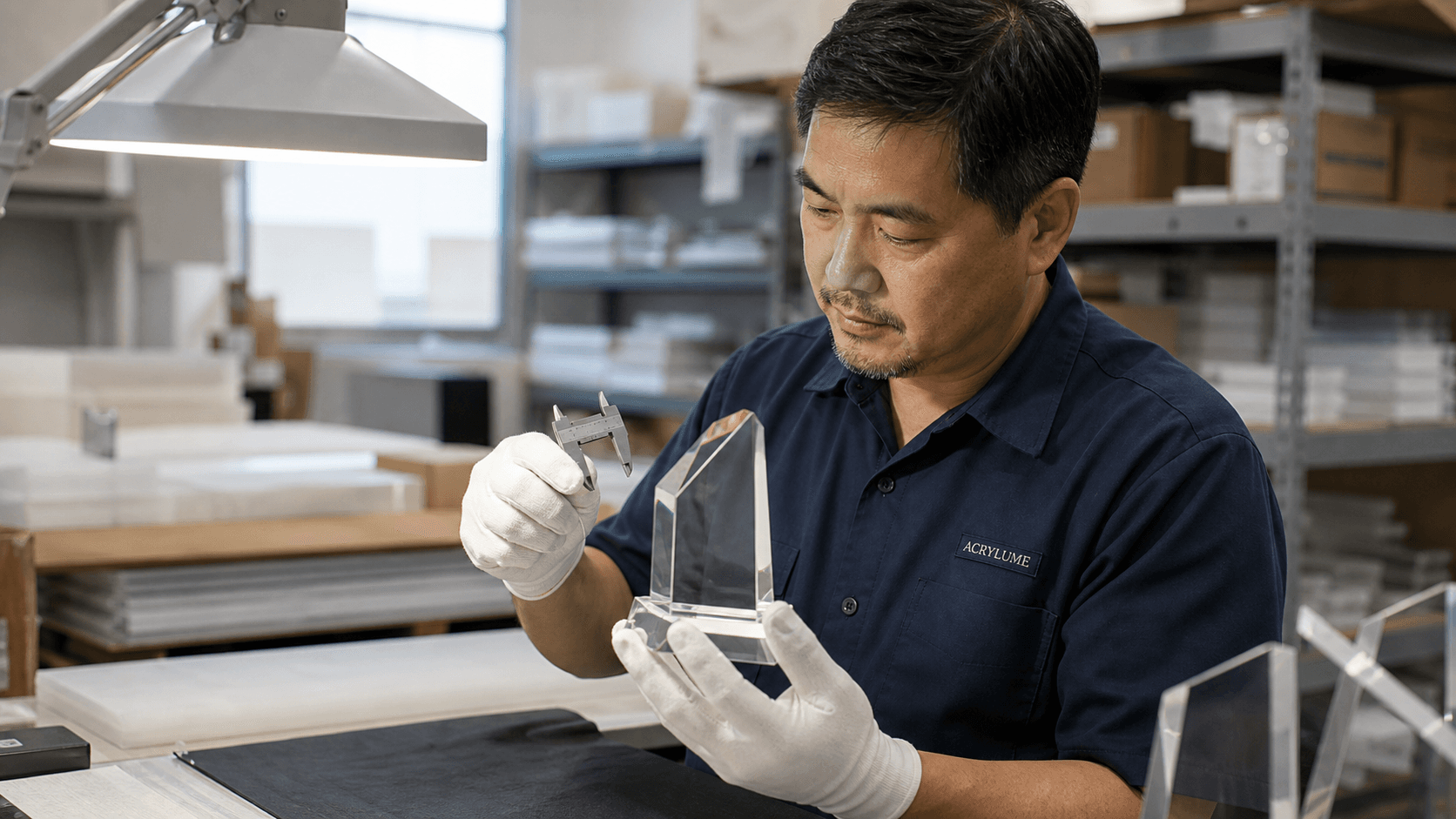
Factory testing should check key compartment dimensions, shelf level, print registration, polished edges, product fit, stability, and any retention or security feature. Use the actual product or calibrated gauges for recurring fit checks. Shipment inspection should confirm one complete packed store set with all inserts, graphics, and assembly materials.
Turn the requirement into an approval record
For a B2B order, turn this point into a written part of the brief: name the decision owner, the evidence needed for approval and the condition that would require a revision. This prevents a commercial requirement from being lost between a visual reference, a supplier quotation and a production instruction. It also gives the factory a practical reference during factory testing instead of relying on an informal interpretation after production has started.
Validate the decision in actual use
During sample review, test this decision in the product application rather than in isolation. the approved material, finished dimensions, visual surface, functional fit, components, packing, and final customer requirements should be reviewed with the approved artwork, material and packing assumptions in view. Record the result with photographs and a dated approval note, then carry the same checkpoints into in-process inspection and shipment preparation.
Plan handling, packing and delivery
Use pack-out logic that protects finished faces and lets store teams identify the complete display, accessories, and instructions. Avoid mixed loose parts that can be misassigned between stores. For fragile visual components, provide replacement quantities or part codes within the first rollout rather than waiting for a service issue.
Turn the requirement into an approval record
For a B2B order, turn this point into a written part of the brief: name the decision owner, the evidence needed for approval and the condition that would require a revision. This prevents a commercial requirement from being lost between a visual reference, a supplier quotation and a production instruction. It also gives the factory a practical reference during factory testing instead of relying on an informal interpretation after production has started.
Validate the decision in actual use
During sample review, test this decision in the product application rather than in isolation. the approved material, finished dimensions, visual surface, functional fit, components, packing, and final customer requirements should be reviewed with the approved artwork, material and packing assumptions in view. Record the result with photographs and a dated approval note, then carry the same checkpoints into in-process inspection and shipment preparation.
Make the RFQ comparable across suppliers
A comparable RFQ includes product samples or measurements, display quantity by market, store pack-out, branding files, fixture material, hardware, sample approval, inspection, and dispatch date. Ask the supplier to flag where product variation, mandatory retail fixtures, or store assembly changes the design or cost.
Turn the requirement into an approval record
For a B2B order, turn this point into a written part of the brief: name the decision owner, the evidence needed for approval and the condition that would require a revision. This prevents a commercial requirement from being lost between a visual reference, a supplier quotation and a production instruction. It also gives the factory a practical reference during factory testing instead of relying on an informal interpretation after production has started.
Validate the decision in actual use
During sample review, test this decision in the product application rather than in isolation. the approved material, finished dimensions, visual surface, functional fit, components, packing, and final customer requirements should be reviewed with the approved artwork, material and packing assumptions in view. Record the result with photographs and a dated approval note, then carry the same checkpoints into in-process inspection and shipment preparation.
Keep the approved record useful for repeat orders
Retain the approved drawing, material description, artwork revision, sample photographs, packing record, and inspection notes in one project file. A repeat order should start by confirming what remains unchanged and identifying any new destination, quantity, product, or installation condition before production is scheduled.
Turn the requirement into an approval record
For a B2B order, turn this point into a written part of the brief: name the decision owner, the evidence needed for approval and the condition that would require a revision. This prevents a commercial requirement from being lost between a visual reference, a supplier quotation and a production instruction. It also gives the factory a practical reference during factory testing instead of relying on an informal interpretation after production has started.
Validate the decision in actual use
During sample review, test this decision in the product application rather than in isolation. the approved material, finished dimensions, visual surface, functional fit, components, packing, and final customer requirements should be reviewed with the approved artwork, material and packing assumptions in view. Record the result with photographs and a dated approval note, then carry the same checkpoints into in-process inspection and shipment preparation.
Buyer checklist before approval
A short written checklist helps a procurement team confirm that the production decision is complete before a project moves into volume manufacturing. Review the points below with the supplier and attach the final version to the approval record.
- Actual product set and weights supplied
- Tester/replenishment routine tested
- Merchandising and cleaning sample approved
- Store-level kits and labels defined
- Spare/replacement parts planned
These checks are not intended to replace a project-specific specification. They provide a practical handover between the buyer, artwork owner, factory team and logistics contact so each party knows which requirement has already been approved and which still needs an answer.
Production and delivery checks
Production planning should begin with a controlled handover: the approved artwork or drawing, material and finish, sample photographs, packing instruction and named inspection points. In-process factory testing is most useful when it checks the risks that affect the final product in use, not only a random finished unit. If the product has an assembly, a product-fit condition, a variable-data field or an installation component, include that condition in the written inspection plan.
Before dispatch, shipment inspection should look at the product and the complete packed set. Open selected cartons, check the protective materials, count components, compare carton labels with the required destination logic and photograph the prepared set. This evidence gives the receiving team a clearer reference and makes repeat orders easier to manage.
Conclusion
A practical brief, a documented sample and a defined inspection plan give a custom acrylic project a stronger basis for cost, quality and delivery decisions. Share the details that affect the product in use, then keep the approved record available for future orders and programme updates.